Second-Story Addition vs ADU in Sacramento: Cost, Fees and Rules
When a family runs out of room, there are two ways to build up or out: a home addition (a second story or extra rooms that become part of your house) or an ADU (a separate unit with its own kitchen, bathroom and entrance, which can also be built as a second story). They can look similar from the street, but the rules, the paperwork and what you can do with the space afterwards are different.
The short answer
- Choose an addition if the space is for your own household: bigger bedrooms, a primary suite, a home office, more living area.
- Choose an ADU if the space should work on its own: a parent or adult child who wants independence, a caregiver, or a long-term rental.
Can an ADU be on a second floor?
Yes. The state's ADU handbook gives examples of an attached ADU built on top of an attached garage and one built as a new second story. State law sets the minimum heights a city must allow:
- Detached ADU: 16 feet; 18 feet within half a mile of major transit (plus 2 feet to match the roof pitch of the house).
- Attached ADU: 25 feet or the zone's height limit for the main house, whichever is lower. The city does not have to allow more than two stories.
Size rules: a city cannot set a maximum below 850 square feet (1,000 for a unit with more than one bedroom). A detached ADU can be up to 1,200 square feet; an attached one is capped at 50% of the existing house.
How the three cities differ
City of Sacramento. Owners choose between the city's own ADU rules and the state rules. Under the local option, ADU height follows the zone limit (35 feet in R-1), second floors need 3-foot side and rear setbacks, and two ADUs are allowed with detached units totaling up to 1,200 square feet.
Folsom. Under the 2026 ordinance, detached ADUs outside the state conversion rules are capped at 25 feet or the height of the house, whichever is lower. Two-story ADUs get extra design rules, and second-story windows within 10 feet of a property line need translucent glass or a similar privacy treatment.
Elk Grove. The city updated its ADU rules in 2025. Check the current height limits for your zone with the city before you design; they depend on where the unit sits on the lot.
A second-story addition (not an ADU) follows your zone's normal height and setback rules for the house itself, and it goes through regular building permit review rather than the state's ministerial ADU approval.
Money: fees and property tax
- Impact fees: an ADU of 750 square feet or less pays no impact fees. Above that, fees must be proportional to the size of the main house. School district fees still apply in Sacramento.
- Property tax: for both an addition and an ADU, California reassesses only the newly built part. The rest of your property keeps its existing assessed value.
- Financing: both are usually financed through home equity or a renovation loan. See our financing page for how payments work.
What a second-story addition costs in Sacramento
Building up costs more than its square footage suggests, because the house underneath has to be checked and strengthened before the new floor goes on.
The structural work behind the number
- Foundation and footings. A structural engineer checks whether the existing footings can carry a second floor. Angi's cost guide (2026 data) puts foundation support work at $5,000 or more when reinforcement is needed.
- Framing and seismic load. The added weight, and the sideways load from wind and earthquakes, has to travel through the first-floor walls to the foundation. That often means opening walls to add connections and shear strength, which is engineered on the plans rather than decided on site.
- Roof removal. The existing roof usually comes off and a new one goes on top of the new floor; Angi lists roof replacement at $4.35 to $11 per sq ft.
- Stairs. A main staircase runs $2,400 to $4,000 in the same guide, up to $6,000 for high-end designs, and it takes floor area from the first story.
- Temporary relocation. Angi notes that you will need to be out of the house during construction, for about three to six months on a partial addition and six to twelve months on a full one. Rent for that period belongs in the budget.
City of Sacramento permit and plan check fees
The City's Building Division permits a second floor as a Residential Addition, and most of its fees scale with project valuation, which the City defines as the total value of all work, labor and finishes included. From the City's fee tables:
- Building permit fee (Table A, Building Permit Fee Schedule): for residential work valued over $100,000, $1,078 plus $0.006787 for each dollar above $100,000.
- Plan review fee (Table B, Plan Review Fee Schedule): for residential work over $100,000, 42% of the building permit fee.
- Technology fee: 10% of the building permit and plan review fees. General plan fee: $2.60 per $1,000 of valuation.
At a $200,000 valuation those four come to $1,757, $738, $249 and $520, or about $3,264 in total, before the construction excise tax and the Fire Department, green building and strong motion fees, which the City also charges on every residential addition. School fees apply only when the addition adds more than 500 sq ft (Education Code 17620), at $2.90 to $7.23 per sq ft depending on the district (City form CDD-0226). Park impact fees and the residential construction tax apply only if the work creates a new dwelling unit. For an exact figure, the City prepares a preliminary fee estimate from form CDD-0278 for $216 on projects valued under $1 million.
Market cost range
Angi's "How Much Does It Cost to Add a Second Story? [2026 Data]" puts the national average at $175,000, with most projects between $100,000 and $250,000, or $100 to $300 per sq ft, and up to $500 per sq ft for complex projects with high-end materials. It gives no Sacramento figure; its only California city, Los Angeles, runs $500,000 to $1,000,000 for a full second story and $150,000 to $300,000 for a partial one. For comparison, our published starting prices for a custom ADU run from $300 per sq ft on a compact 450 sq ft unit down to $288 per sq ft from 1,000 sq ft, and a garage conversion starts from $65,000 (see how much an ADU costs in Sacramento).
The real number for your house depends on what the engineer finds in the existing structure. To get one, request a quote with your address and the space you want to add.
Renting and selling
- An ADU can be rented. Cities may require rentals of more than 30 days, and ADUs approved under the state conversion rules must be rented for more than 30 days. The City of Sacramento bans short-term rentals of state-standard ADUs; Folsom requires 30+ day rentals.
- No owner-occupancy rule for ADUs. California removed it permanently. A junior ADU is different: the owner must live on site if it shares a bathroom with the house.
- An ADU cannot be sold separately from the house, except through a nonprofit arrangement or a condo option that a city has to adopt by its own ordinance.
- An addition is simply part of your house. It cannot be rented as a separate legal unit.
Side by side
| Second-story addition | ADU (incl. second-story ADU) | |
|---|---|---|
| Own kitchen and entrance | No | Yes |
| Approval | Regular building permit | Ministerial ADU permit |
| Can be rented separately | No | Yes (30+ days) |
| Impact fees | Per city schedule | None at 750 sq ft or less |
| Property tax | New part reassessed | New part reassessed |
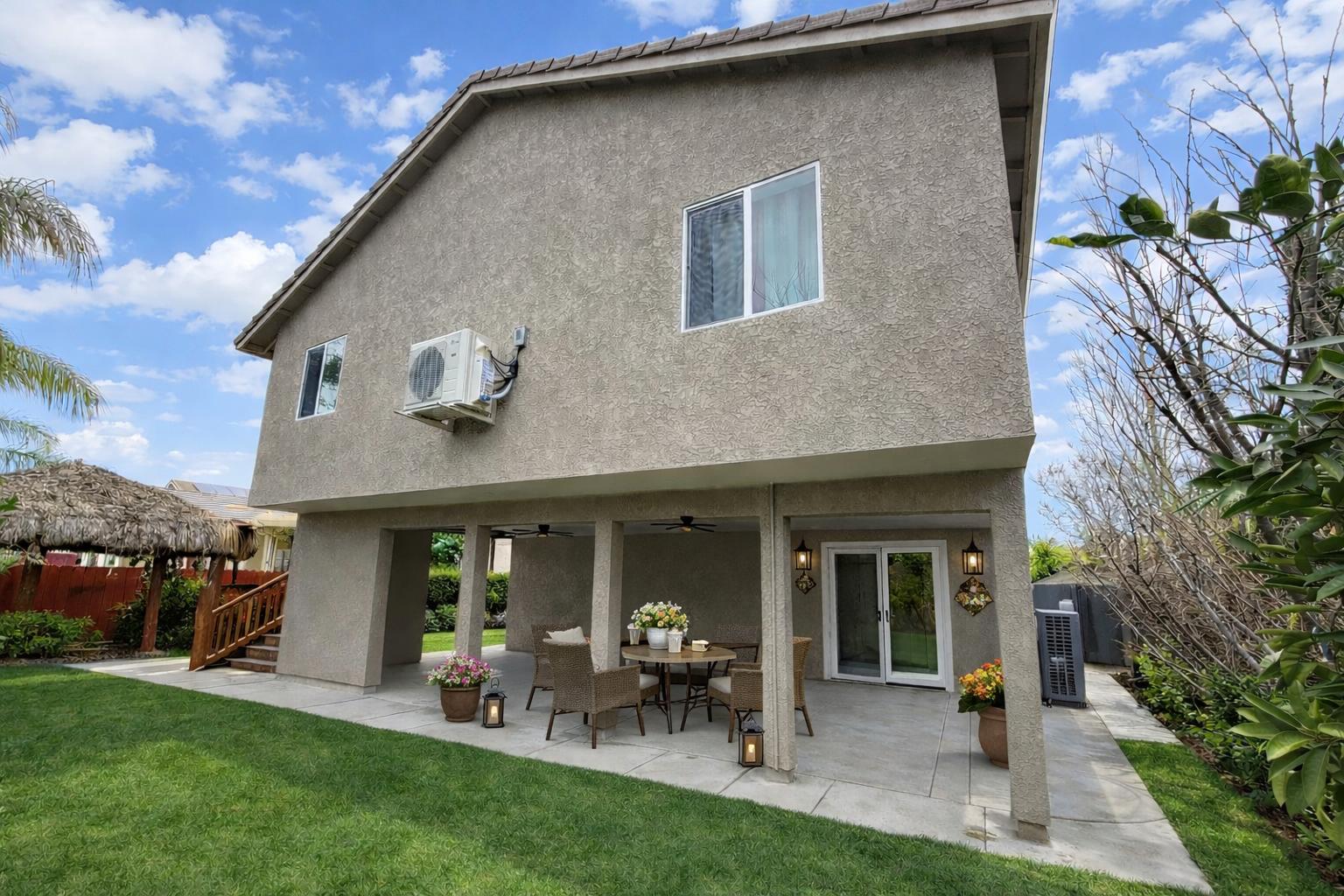
You can see a real example of the second option in our second-story attached ADU in Sacramento, built above a covered patio so the backyard stayed free.
FAQ
How much does it cost to add a second story to a house in Sacramento?
Angi's national guide (2026 data) gives no Sacramento figure and puts the typical range at $100,000 to $250,000, or $100 to $300 per sq ft. The condition of your foundation and framing, roof removal, stairs and time out of the house set the final cost.
What are the City of Sacramento permit fees for a second-story addition?
Fees are based on valuation. Above $100,000, the building permit fee is $1,078 plus $0.006787 per dollar over $100,000, and plan review is 42% of that. On a $200,000 project, those two plus the technology and general plan fees total about $3,264, before other City, school and fire fees.
Do you have to move out during a second-story addition?
Usually, yes. Angi's guide says you will need to be out of the house during construction, for about three to six months on a partial addition and six to twelve months on a full one.
Sources: California Government Code 66311.5, 66314, 66315, 66321, 66323, 66333, 66341, 66342; Revenue and Taxation Code 71; Education Code 17620; HCD ADU Handbook (January 2025 edition); City of Sacramento ADU Resource Center; Folsom Municipal Code chapter 17.105; City of Sacramento Building Division, Fees by Project: Residential Addition, Building Division Fee Detail Table A (Building Permit Fee Schedule, revised July 19, 2025) and Table B (Plan Review Fee Schedule), Fees and Charges entries for the technology and general plan fees, CDD-0226 School District Impact Fees (rev. 09-09-2026) and CDD-0278 Applicant's Preliminary Building Permit Fee Estimate Worksheet (rev. 07-12-2026); Angi, How Much Does It Cost to Add a Second Story? [2026 Data] (updated November 27, 2025). Starting prices are Result Construction's published rates as of October 2026 and exclude fees. Checked September and October 2026.
Adding space in the Sacramento area?
Addition or ADU: not sure which fits?
Tell us how you want to use the space. We'll look at your lot and zoning and tell you which option is realistic.